Tomorrow night, I am making yet another journey to the Frank Banko Alehouse Cinema at the SteelStacks in Bethlehem. I will be seeing a screening of F.W. Murnau's 1922 horror classic Nosferatu, eine Symphonie des Grauens. It is being featured as part of the Not So Silent Cinema series. This means that they will be screening the silent film while a live orchestra accompainment.
It is going to be incredible.
Next up on my roster:
Monday, October 22: The Graduate
Wednesday, October 24: Frankenstein/Bride of Frankenstein double feature.
Wednesday, October 31: The Shining
19 October 2012
26 September 2012
07 September 2012
The best Judy Garland film I'll bet you've never heard of
Everybody is familiar with Judy Garland (whether or not they know it). The Wizard of Oz is probably the most seen movie of all time. Equally iconic is her portrayal of Esther Blodgett/Vicki Lester in 1954's A Star is Born. And of course, she's known for reigning the MGM musical and her "let's put on a show!" movies with Mickey Rooney.
My favorite Judy Garland movie, however is none of these powerhouses. Rather, it's a little movie from 1945 called The Clock, and it's a complete gem. Directed by Vincente Minnelli, The Clock is a simple story about a soldier and a girl during World War II.
Robert Walker plays Corporal Joe Allen, a young soldier from Indiana who comes to New York City on leave. He meets Alice Mayberry (Judy Garland) and they spend the day together, watching sea lions at the Central Park zoo and taking in art at a museum.
After meeting for dinner, they realize that they've fallen for each other. Breakfast with new friends, an aged milkman and his wife, make them decide to get married. Unfortunately, getting married takes a while, and Joe's time is running out before he has to go overseas. Finally though, they meet the justice of the peace. With trains loudly rushing past draining out the marriage vows, and witnessed only by the cleaning lady, Joe and Alice say their "I Dos" and become Mr. and Mrs.
Afterwards, they eat their wedding supper at a little diner. Alice finally breaks down in devastation at her disappointment at such a bust of a wedding. It is further rubbed in when, walking past a church, a beautiful wedding is breaking up, complete with friends, family, and a happy couple. Joe and Alice enter the church which is empty, save for the altar boy extinguising candles, and quietly, recite their wedding vows to each other.
The next morning, Joe departs for war with the other soldiers, and Alice, along with the other soldiers' girls, go on with her life and hopes for the best.
There's literally nothing that I don't enjoy about this movie. Sure, the storyline isn't particularly believeable (Really? You fall in love with someone after one day? How does Judy Garland know that Robert Walker isn't going to end up a crazy, murderous freak?) but when it comes down to it, who really cares?
Robert Walker plays the small-town boy with a wide-eyed naivete that is completely endearing. When you get involved, it's really no surprise that Judy's character falls for him. His childlike wonder at everything is adorable, from his confusion at having to buy a bus pass "I guess he (the bus driver) thought I was tryin' to get away with something" to his observation of museums "You know, you can really learn a lot in a museum." He plays the role with such honesty, it's tough not to want to reach out to him.
It seems that people never give Judy Garland enough credit as an actress. She's still esteemed as the greatest musical performer of all time (and rightly so) but she was a really fine dramatic actress. The Clock proves it. She doesn't sing a note, she doesn't take one step in time to music. Still, she shows so much emotion, it's astounding. Not the innocent here, Judy's character is a streetwise girl who is kind of hard-bitten and semi world-weary. It's a really nice change of pace.
Another great thing about The Clock's cast is New York City. Yes, that's right, I included New York City in the cast. Never before have I seen such a fantastic use of a city as a character. It brings Joe and Alice together, it tears them apart, it reunites them.
There's a really fantastic shot of Joe standing on the sidewalk, looking up at the buildings. The tops are always just out of frame, and the shadows cast obscure his face. Watching The Clock, it's really tough to remember that it was shot entirely on the MGM lot- even Penn Station and the Central Park zoo were replicas.
There's lots of great MGM stock players in this movie as well. James Gleason plays Al Henry, the milkman who helps Alice and Joe decide that their getting married is a must.
My favorite is Keenan Wynn as the drunk. In a performance that was surely improvised, he yells, shouts, and harasses everyone he sees, in particular a well-dressed elderly lady (played by Angela Lansbury's mother, Moyna MacGill) daintilly eating a pastry. As she becomes more and more harried, she speeds up the eating of her pastry until she's literally shoveling forkfulls of it in her mouth and getting tangled up in her pearl necklace. Not only is that the funniest scene in the movie, I daresay that it's one of the best comedy bits ever filmed.
I first saw The Clock in 2007, during a birthday salute to Judy Garland on TCM. I instantly fell in love with it, and I have been ever since.
So here's your mission: Get yourself out to a Barnes and Noble, shop.tcm.com, or Amazon, and get yourself a copy. The Clock is a great treat for any fan of Judy Garland, classic cinema, and wartime romance.
My favorite Judy Garland movie, however is none of these powerhouses. Rather, it's a little movie from 1945 called The Clock, and it's a complete gem. Directed by Vincente Minnelli, The Clock is a simple story about a soldier and a girl during World War II.
After meeting for dinner, they realize that they've fallen for each other. Breakfast with new friends, an aged milkman and his wife, make them decide to get married. Unfortunately, getting married takes a while, and Joe's time is running out before he has to go overseas. Finally though, they meet the justice of the peace. With trains loudly rushing past draining out the marriage vows, and witnessed only by the cleaning lady, Joe and Alice say their "I Dos" and become Mr. and Mrs.
Afterwards, they eat their wedding supper at a little diner. Alice finally breaks down in devastation at her disappointment at such a bust of a wedding. It is further rubbed in when, walking past a church, a beautiful wedding is breaking up, complete with friends, family, and a happy couple. Joe and Alice enter the church which is empty, save for the altar boy extinguising candles, and quietly, recite their wedding vows to each other.
The next morning, Joe departs for war with the other soldiers, and Alice, along with the other soldiers' girls, go on with her life and hopes for the best.
There's literally nothing that I don't enjoy about this movie. Sure, the storyline isn't particularly believeable (Really? You fall in love with someone after one day? How does Judy Garland know that Robert Walker isn't going to end up a crazy, murderous freak?) but when it comes down to it, who really cares?
Robert Walker plays the small-town boy with a wide-eyed naivete that is completely endearing. When you get involved, it's really no surprise that Judy's character falls for him. His childlike wonder at everything is adorable, from his confusion at having to buy a bus pass "I guess he (the bus driver) thought I was tryin' to get away with something" to his observation of museums "You know, you can really learn a lot in a museum." He plays the role with such honesty, it's tough not to want to reach out to him.
It seems that people never give Judy Garland enough credit as an actress. She's still esteemed as the greatest musical performer of all time (and rightly so) but she was a really fine dramatic actress. The Clock proves it. She doesn't sing a note, she doesn't take one step in time to music. Still, she shows so much emotion, it's astounding. Not the innocent here, Judy's character is a streetwise girl who is kind of hard-bitten and semi world-weary. It's a really nice change of pace.
There's a really fantastic shot of Joe standing on the sidewalk, looking up at the buildings. The tops are always just out of frame, and the shadows cast obscure his face. Watching The Clock, it's really tough to remember that it was shot entirely on the MGM lot- even Penn Station and the Central Park zoo were replicas.
There's lots of great MGM stock players in this movie as well. James Gleason plays Al Henry, the milkman who helps Alice and Joe decide that their getting married is a must.
My favorite is Keenan Wynn as the drunk. In a performance that was surely improvised, he yells, shouts, and harasses everyone he sees, in particular a well-dressed elderly lady (played by Angela Lansbury's mother, Moyna MacGill) daintilly eating a pastry. As she becomes more and more harried, she speeds up the eating of her pastry until she's literally shoveling forkfulls of it in her mouth and getting tangled up in her pearl necklace. Not only is that the funniest scene in the movie, I daresay that it's one of the best comedy bits ever filmed.
I first saw The Clock in 2007, during a birthday salute to Judy Garland on TCM. I instantly fell in love with it, and I have been ever since.
So here's your mission: Get yourself out to a Barnes and Noble, shop.tcm.com, or Amazon, and get yourself a copy. The Clock is a great treat for any fan of Judy Garland, classic cinema, and wartime romance.
18 August 2012
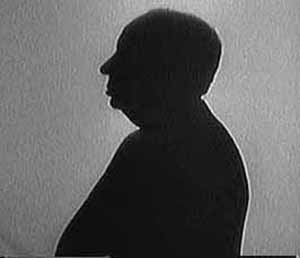
Happy Birthday, Hitch
Although I've seen this movie many a time, I'm still completely involved every time I watch it. During the plane chase, I get nervous, and I (along with a few other people) screamed when the plane collided with the truck and exploded.
After the end of the movie, a discussion was again led about gender roles, sexuality, obsession, and masochism. It was also touched upon that Vertigo was recently voted the greatest film of all time, thus beating out Citizen Kane, by Sight and Sound and the semi-controversy/uproar/hooplah that caused. Again, the discussion was pretty interesting, and the audience was willing to participate.
Whenever I see a classic film in a theater, I am always surprised by the incredible turnouts. The ages always range from the very young (when I went to see Singin' in the Rain, I saw a couple of kids that had to be kindergarten age) to the old. I like to imagine that the older couples I see went to see the film when it was first released, possibly on a first date. It's really nice to know that these films still have an audience and that people are passing on their love of classic cinema to future generations. Here's hoping they never stop.
12 August 2012
The Master of Suspense
There are exicting goings- on. August 13 marks the anniversary of the birth of one of the most influental and probably the best known director in history- the Master of Suspense, Alfred Hitchcock. In celebration of what would have been Hitch's 113 birthday, ArtsQuest in Bethlehem is celebrating for three nights. And what better way to toast Alfred Hitchcock's birth than to screen three of his best and most beloved classics?
Monday night kicks off the festivities with a screening of 1959's North by Northwest. Starring Cary Grant, Eva Marie Saint, and James Mason, it's a tale of mistaken identity and spy-versus-spy crossings and double crossings.
Tuesday night is kind of the night I'm looking foward to most. It's Psycho, and it's Hitchcock's most famous film. It's also still seriously scary, so I expect to hear a couple of screams. Or at least audible gasps.
The celebration concludes Wednesday night with Vertigo, a film that people fall over themselves praising but one that I just can't figure out. Maybe Wednesday night I'll have an epiphany and finally understand it. I do have a bit of a soft spot for Vertigo however, as it was the first Hitchcock film I had ever seen.
And, just for a bit of fun, let's pretend that this was a weeklong event, and I were in charge of picking the films to screen. I think it would look something like this:
Monday: North by Northwest (1959)
Tuesday: Psycho (1960)
Wednesday: Rebecca (1940)
Thursday: Shadow of a Doubt (1943)
Friday: Strangers on a Train (1951)
Saturday: The Man who Knew too Much (1956)
Sunday: The Lodger (1927)
Question: What is/are your favorite Hitchcock film/ films?
Monday night kicks off the festivities with a screening of 1959's North by Northwest. Starring Cary Grant, Eva Marie Saint, and James Mason, it's a tale of mistaken identity and spy-versus-spy crossings and double crossings.
Tuesday night is kind of the night I'm looking foward to most. It's Psycho, and it's Hitchcock's most famous film. It's also still seriously scary, so I expect to hear a couple of screams. Or at least audible gasps.
The celebration concludes Wednesday night with Vertigo, a film that people fall over themselves praising but one that I just can't figure out. Maybe Wednesday night I'll have an epiphany and finally understand it. I do have a bit of a soft spot for Vertigo however, as it was the first Hitchcock film I had ever seen.
And, just for a bit of fun, let's pretend that this was a weeklong event, and I were in charge of picking the films to screen. I think it would look something like this:
Monday: North by Northwest (1959)
Tuesday: Psycho (1960)
Wednesday: Rebecca (1940)
Thursday: Shadow of a Doubt (1943)
Friday: Strangers on a Train (1951)
Saturday: The Man who Knew too Much (1956)
Sunday: The Lodger (1927)
Question: What is/are your favorite Hitchcock film/ films?
10 August 2012
A true story
This was the dream I had last night:
During a summer family get-together, I was sitting at a wooden picnic table in my backyard with my uncle Jimmy, my brother, and my parents' friend Ricky. I wandered over to my driveway where I found Laurence Olivier, John Gielgud, and my friend Emily. There was a fire burning in a trash can, and standing next to it, Larry treated us to a short performance of Richard III (which just so happens to be my favorite of his Shakespeare performances).
After applauding, I, for reasons unbeknownst to me, climbed atop the Saab in my garage and then went into the kitchen. I found Larry in there as well. He was wearing a yellow t shirt that was at least two sizes too small for him, and it had that German hearts-and-sparrows design on it. (Perhaps he knew I have a fondness for terribly ugly clothing and was attempting to appeal to me?)
I greeted him with a squeal of "Larr Bear!" and jumped into his arms. (Yes, he did catch me). After a nice tight hug, I told him he did good. He smiled and thanked me. I sensed that something was amiss, because I asked him if he was okay. He responded with "Yeah, I'm just tired."
Now here's where things get a bit muddled. I can't remember what happened exactly, but he and I somehow ended up making out furiously on the squeaky, ugly, blue flowery sofa in my living room. To my disapointment, he was not the best kisser, but I was making out with Laurence Olivier, so who was I to complain?
We were interrupted by the sounds of Street Fighting Man by The Rolling Stones (previously one of my favorite songs by them). I wasn't sure where it was coming from but it was only getting louder. To my dismay, I realized that it was coming from my alarm clock. I woke up in my bed, chest pounding, and mixed feelings of "Wow, what a super rad, albeit very odd dream" and "Son of a bitch, why couldn't I have at least sealed the deal? Goddamn Rolling Stones."
As I got out of bed and ready for work, I swore I could hear a quiet giggle from behind me. Looking in my mirror, a picture of Vivien Leigh taped to my wall reflected back at me. I knew that, wherever she was, she somehow knew what I had dreamed about, and was laughing her ass off. And I'll bet Larry was right next to her.
Grabbing my keys off the dresser, I muttered "Fuck off, Vivien" and shut the door.
After applauding, I, for reasons unbeknownst to me, climbed atop the Saab in my garage and then went into the kitchen. I found Larry in there as well. He was wearing a yellow t shirt that was at least two sizes too small for him, and it had that German hearts-and-sparrows design on it. (Perhaps he knew I have a fondness for terribly ugly clothing and was attempting to appeal to me?)
I greeted him with a squeal of "Larr Bear!" and jumped into his arms. (Yes, he did catch me). After a nice tight hug, I told him he did good. He smiled and thanked me. I sensed that something was amiss, because I asked him if he was okay. He responded with "Yeah, I'm just tired."
Now here's where things get a bit muddled. I can't remember what happened exactly, but he and I somehow ended up making out furiously on the squeaky, ugly, blue flowery sofa in my living room. To my disapointment, he was not the best kisser, but I was making out with Laurence Olivier, so who was I to complain?
We were interrupted by the sounds of Street Fighting Man by The Rolling Stones (previously one of my favorite songs by them). I wasn't sure where it was coming from but it was only getting louder. To my dismay, I realized that it was coming from my alarm clock. I woke up in my bed, chest pounding, and mixed feelings of "Wow, what a super rad, albeit very odd dream" and "Son of a bitch, why couldn't I have at least sealed the deal? Goddamn Rolling Stones."
As I got out of bed and ready for work, I swore I could hear a quiet giggle from behind me. Looking in my mirror, a picture of Vivien Leigh taped to my wall reflected back at me. I knew that, wherever she was, she somehow knew what I had dreamed about, and was laughing her ass off. And I'll bet Larry was right next to her.
Grabbing my keys off the dresser, I muttered "Fuck off, Vivien" and shut the door.
29 April 2012
Eight
Coming in at number eight is Audrey Hepburn. An actress who is remembered more so for being an icon than an actress, a la Marilyn Monroe. But if you ask me, Audrey Hepburn was a hell of an actress and too bad people don't quite know that. Of course she was beautiful, and glamorous, and stylish, and her speaking voice could melt your heart, but above all else, she was a real actress.
Her most famous film is of course 1961's Breakfast at Tiffany's. In this film, Audrey plays the free-spirited and (seemingly) carefree Holly Golightly, a young call girl living in New York City. Always on the lookout for a nice millionaire to marry, she doesn't notice that her downstairs neighbor is absolutely crazy about her.
Originally, the character was written with Marilyn Monroe in mind, and author Truman Capote apparently threw a fit when Audrey was cast instead. But it was for the best. Audrey took a character who was originally hard-bitten and honestly, quite unlikable, and gave her a softer, more vulnerable core surrounded by a tough shell. She tries her best to act like everything is wonderful when, quite frankly, it isn't. I'm not as sure that Marilyn Monroe would have been able to give Holly more complex layers as Audrey was able to.
In 1964, Audrey beat out all other competition for the role of Eliza Doolittle in the film version of My Fair Lady. (Competition included Elizabeth Taylor and Julie Andrews). Directed by George Cukor, Audrey deftly played the ultimate ugly duckling role with sympathy and a bit more depth than originally written.
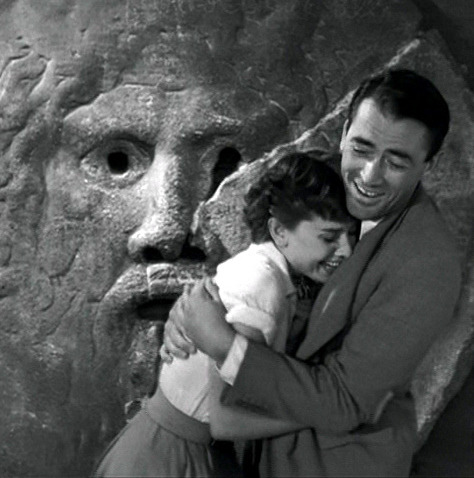
But the movie that I remember Audrey Hepburn most for is 1953's Roman Holiday. She plays a princess on the lam who falls in love with newspaperman Gregory Peck. Since I don't believe in spoilers, I won't give anything away, except that Roman Holiday has one of my favorite movie endings ever.
When Roman Holiday was being made, Audrey Hepburn was not a big star. As such, her original credit was supposed to come after the title of the film. However, Gregory Peck realized that she was absolute magic and insisted that her name come above the title, after his. After Roman Holiday was released, the whole world realized Audrey's magic and fell under her spell. She would be awarded with film's highest honor for her performance in the film, the Academy Award as Best Actress of the year.
But above all the movies and the great style, the beautiful, quiet speaking voice, the elegance and poise, what made Audrey Hepburn so special was her heart. She retired and joined forces with UNICEF to help children in poverty and war ravaged areas that nobody else dared go near. Long before it was fahionable for celebrities to champoin a cause, Audrey Hepburn brought awareness and spoke for those who couldn't help or speak for themselves. Even today, nearly twenty years after her death, the Audrey Hepburn Children's Fund continues to aid those in need. She was also posthumusly awarded the Jean Hersholt Humanitarian Award in recognition of her outstanding charity work and in honor of a remarkable woman.
Her most famous film is of course 1961's Breakfast at Tiffany's. In this film, Audrey plays the free-spirited and (seemingly) carefree Holly Golightly, a young call girl living in New York City. Always on the lookout for a nice millionaire to marry, she doesn't notice that her downstairs neighbor is absolutely crazy about her.
Originally, the character was written with Marilyn Monroe in mind, and author Truman Capote apparently threw a fit when Audrey was cast instead. But it was for the best. Audrey took a character who was originally hard-bitten and honestly, quite unlikable, and gave her a softer, more vulnerable core surrounded by a tough shell. She tries her best to act like everything is wonderful when, quite frankly, it isn't. I'm not as sure that Marilyn Monroe would have been able to give Holly more complex layers as Audrey was able to.
In 1964, Audrey beat out all other competition for the role of Eliza Doolittle in the film version of My Fair Lady. (Competition included Elizabeth Taylor and Julie Andrews). Directed by George Cukor, Audrey deftly played the ultimate ugly duckling role with sympathy and a bit more depth than originally written.
But the movie that I remember Audrey Hepburn most for is 1953's Roman Holiday. She plays a princess on the lam who falls in love with newspaperman Gregory Peck. Since I don't believe in spoilers, I won't give anything away, except that Roman Holiday has one of my favorite movie endings ever.
When Roman Holiday was being made, Audrey Hepburn was not a big star. As such, her original credit was supposed to come after the title of the film. However, Gregory Peck realized that she was absolute magic and insisted that her name come above the title, after his. After Roman Holiday was released, the whole world realized Audrey's magic and fell under her spell. She would be awarded with film's highest honor for her performance in the film, the Academy Award as Best Actress of the year.
But above all the movies and the great style, the beautiful, quiet speaking voice, the elegance and poise, what made Audrey Hepburn so special was her heart. She retired and joined forces with UNICEF to help children in poverty and war ravaged areas that nobody else dared go near. Long before it was fahionable for celebrities to champoin a cause, Audrey Hepburn brought awareness and spoke for those who couldn't help or speak for themselves. Even today, nearly twenty years after her death, the Audrey Hepburn Children's Fund continues to aid those in need. She was also posthumusly awarded the Jean Hersholt Humanitarian Award in recognition of her outstanding charity work and in honor of a remarkable woman.
Subscribe to:
Posts (Atom)